
Fighting Games and the Death of Single Player
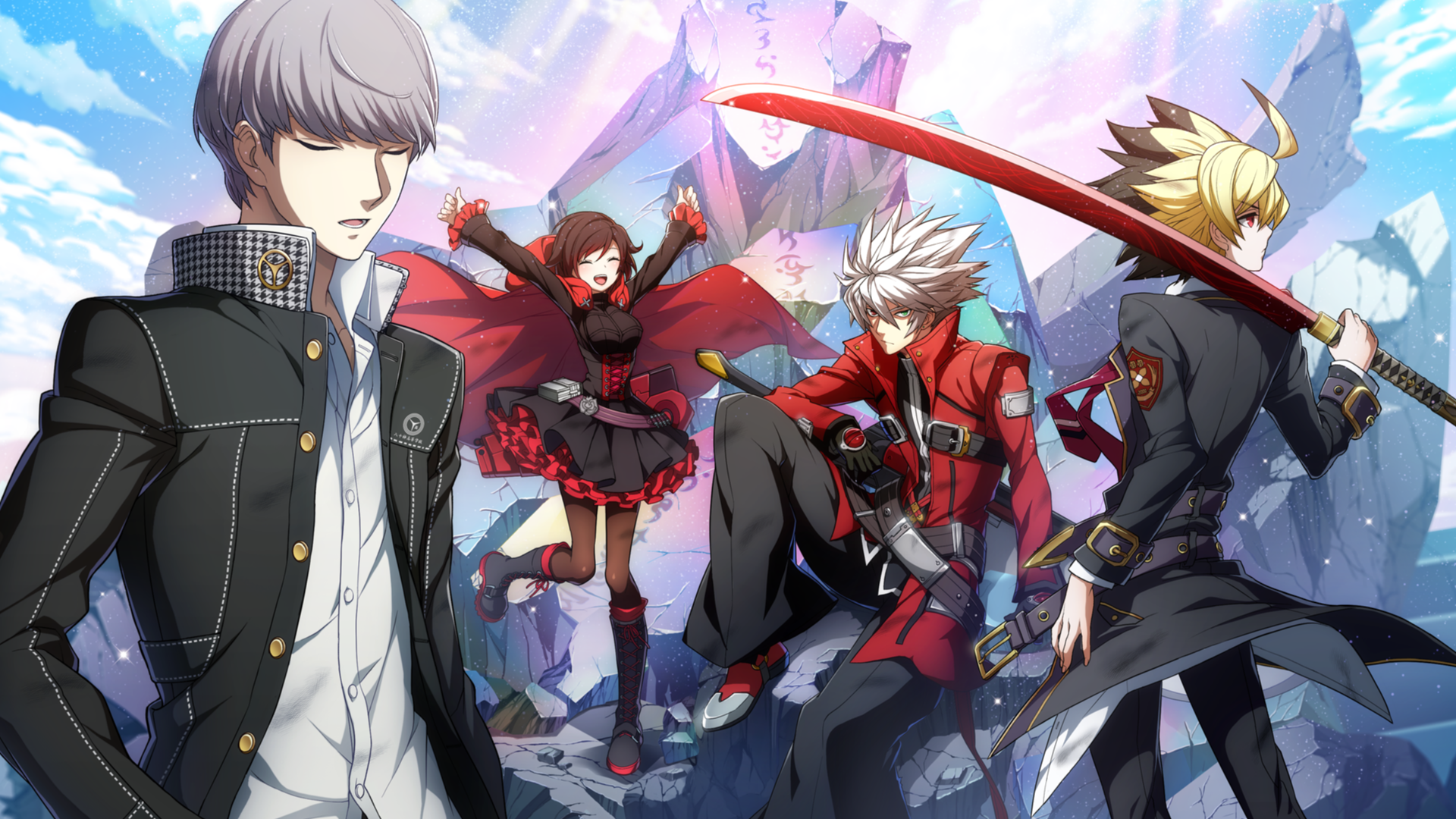
Image Credit: Arc System Works
You know, fighting games are pretty rad. They’re right up there with RPGs as one of my favorite genres of games. Throughout my life, I’ve sunk thousands of hours into all sorts of different fighting games across a ton of different consoles. From the ground-based footsies of Street Fighter, to the high-octane action of Guilty Gear. From casual game nights of Soul Calibur 6 with my college friends, to competing in PlayStation’s official online tournaments in BlazBlue Cross Tag Battle. I know how to find my fun in fighting games.
And all of that is great. But what about the people who aren’t super competitive? What is in these games for the people who want to play them, but don’t want to play an online ranked mode? Or the people who can’t play an online ranked mode because they don’t have a good internet connection?
Today I want to look back at some older fighting games and examine what they had available for the player to do in the era before online gaming existed. We’ll also be looking at the shift to online play, and where we are in the modern era. Fighting games have come a long way from where they started in terms of accessibility, but are they able to cater to the casual audience?
The Old Era
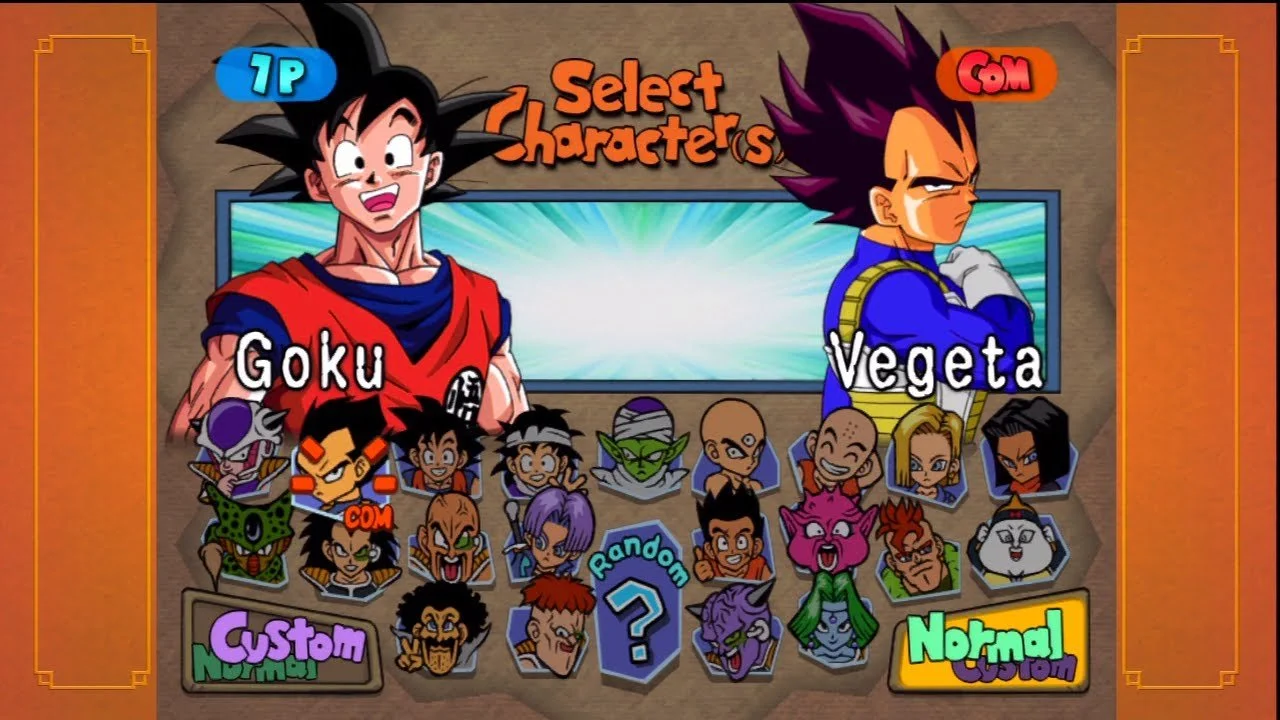
Image Credit: Dimps
We’re going to start by talking about one of the first fighting games that I have memories of playing. Dragon Ball Z Budokai is an all-time classic for me. This was a game that me and my older siblings would play all the time, and I would continue playing and practicing on my own time. Really it was the start of this horrible addiction for me, as well as me learning about my own competitive nature. I would spend so much time in training mode learning the super moves for each character just to watch them. This was a time before YouTube so I couldn’t just look up a compilation.
By far though, my favorite part of this game was the story mode. In my teen years, replaying the story would lead me down another dark rabbit hole of mine called “speedrunning” but that’s a discussion for another article. The story of this game ran through the first three sagas of Dragon Ball Z. The Saiyan Saga, Namek Saga, and the Androids and Cell Saga.
In an era before streaming services, this was the most accessible way for me to get familiar with the story of DBZ. You got to see all of the best moments from the show without any of the filler. Like some kind of abridged version of Dragon Ball Z. And they also brought in all of the voice actors from the show to play their characters in this game.
Now that’s all well and good, but what’s the incentive for doing story mode? Your reward for doing that is unlocking the rest of the roster. It might not sound like much, but when we start talking about the modern era, you’ll see why it’s a big deal.
The other cool part of the story mode is that it forces you to play as a bunch of different characters, so you might start the game wanting to play Piccolo, realize he’s trash then switch over to Cell, who plays similarly to Piccolo, but can actually combo. You can then use this knowledge to go through the World Tournament mode to unlock the remainder of the roster.
Another childhood favorite of mine was the Super Smash Bros games. Melee and Brawl specifically had a ton of awesome single-player content. You had fun minigames like Target Test and Home Run Contest. Melee also had individual Target Tests designed for each character. Brawl had the Subspace Emissary story mode, which was great, and had a lot of cool character interactions.
But my favorite mode has to be the Event Matches. These were unique missions that had their own challenges associated with them. Some challenges were simple like beating a gauntlet of enemies. Others had you doing more specific things like keeping a Yoshi Egg safe or outrunning traffic as Captain Falcon. Then in Brawl they went further by giving you co-op Event Matches.
And what do you get for doing this single-player content? More characters and stages. And by unlocking more characters, you then unlock more Event Matches to play. And more Event Matches leads to more potential characters and stages to unlock. It creates a feedback loop where you want to keep doing the single-player content because it will unlock more stuff to do and more ways to play the game.
I’m gonna cap this section off by talking about Soul Calibur 2 and 3. These games have so much content stuffed into them that owning just one of them can keep you busy for a while. Soul Calibur 2’s Weapon Master mode has you going through different maps where each level has a special restriction. You can also switch characters at any point, so it will encourage the player to try a character that’s better suited to the challenge.
With the expanded roster in Soul Calibur 3, every character has been given their own short individual story mode to go through in the Tales of Souls mode. And you also have Chronicles of the Sword. This is an entirely separate story mode where you make your own character and play a simplified RTS game. In this mode, you move your characters around a map and when you run into an enemy you play the fighting part of the game. By all accounts there’s no reason for this mode to exist. But it’s actually pretty cool, and surprisingly deep for just an extra mode.
And this is all in service of, you guessed it, unlocking more characters and stages, as well as items for the game’s create-a-character mode. It also gives you in-game money to buy extras in the shops, like more weapons for characters, or behind-the-scenes things like concept art or character illustrations. That second thing doesn’t mean as much in the internet era, but it’s still cool!
Sadly, as we move into the next generation of consoles, these cool extra modes don’t get to come with us.
Shift to Online
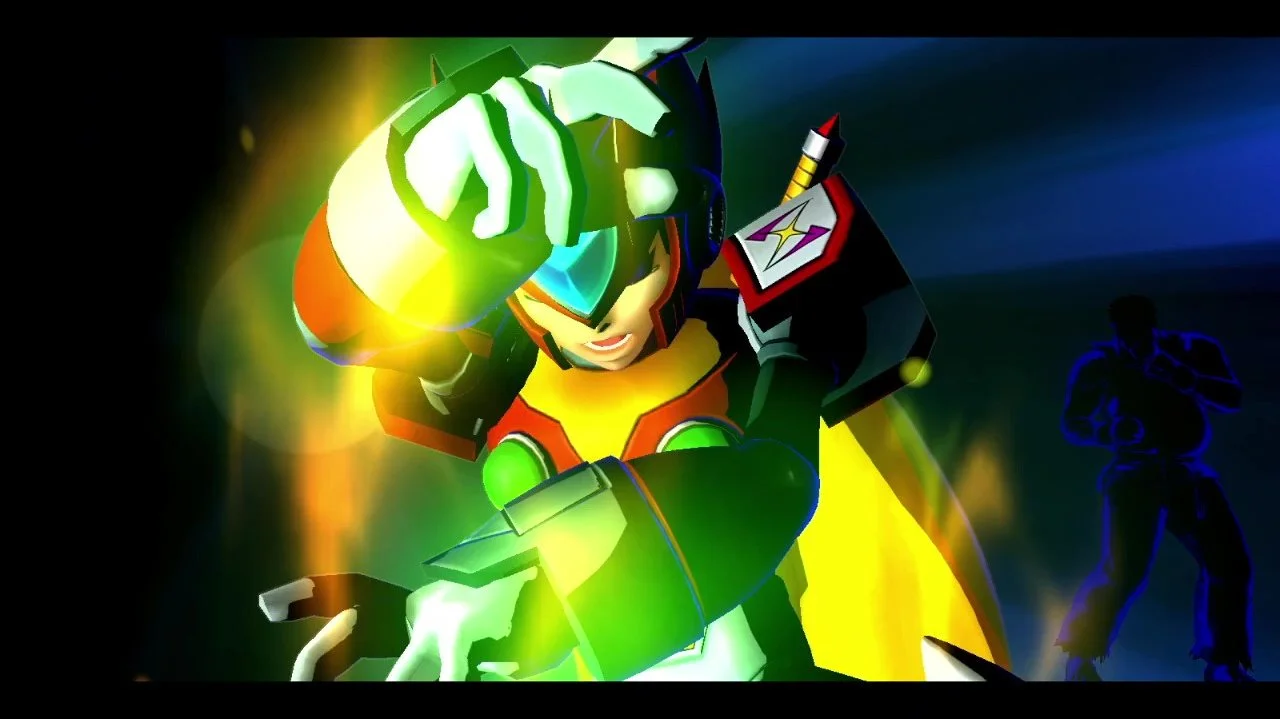
Image Credit: Capcom
The PS3 and Xbox 360 era has had a massive ripple effect on modern gaming as a whole. But in my unprofessional, not owning either console opinion, I think that fighting games made out the worst of any genre. See, online play was beginning to become the new normal. And because more resources were going toward online servers, that meant that something else had to get cut back. And for fighting games, that would be the single-player content.
The vast majority of fighting games at this time had their single-player content stripped down to the bare essentials. It normally consisted of an Arcade mode, where you fight a series of battles. A Survival mode where you see how many rounds you can last before you run out of HP. And a Score Attack where you go for a high score in a limited amount of time.
This is truly nothing content. Arcade mode at least might give you some lore on the characters depending on what game you’re playing. But Survival and Score Attack are carry-overs from the PS1 days of fighting games.
Take Marvel VS Capcom 3 as an example. This is a beloved game that always generates a ton of hype whenever it’s at an offline event. But if you were to boot the game up right now and click on the Offline Mode option, you have an Arcade mode, Versus mode where you can ONLY fight against another human, Training mode, and Mission mode to learn character-specific combos. As a spectator, MVC3 is incredible. But then when you play it on your own, you learn pretty quickly that this game has no content in it.
Persona 4 Arena (Ultimax) is the same way. Once you navigate the shitty main menu, besides online mode you have Arcade, Versus, Score Attack, and the Golden Arena mode which is like Arcade mode, but they incorporate RPG elements into the regular battles. I promise it’s not as exciting as it sounds. It’s just more of the same fighting game you’ve been playing. Granted this is also Persona, so there’s a Story mode. But also, this is Persona so you’ll have people talking at you for 30 minutes instead of playing the game. It’s also not canon, so that’s cool. And honestly, it’s for the best. Aigis has a second, never canonically mentioned sister in this game and she talks with a Brooklyn accent.
The other big thing that came out of this era was DLC, or downloadable content if you’ve mysteriously been under a rock for the last almost two decades. DLC in fighting games is simultaneously a blessing and a curse. On one hand, it means that developers and consumers don’t have to worry about multiple versions of the same game. No longer will we have to buy Street Fighter 4, Super Street Fighter 4, Super Street Fighter 4: Arcade Edition, and Ultra Street Fighter 4. You just had one game getting constant updates.
On the other hand, DLC was pretty much the death of unlockables in this genre. In addition to the removal of meaningful single-player content, you now don’t even get to unlock any new characters if you bother to do it. The only game that I can think of that still had unlockables was Smash 4 on Wii U and 3DS, but those games would also end up getting paid DLC after release.
This is what could loosely be considered the “flop era” of fighting games. There were a lot of great games coming out, but there was also less reason for casual fans to want to play them because of the lack of offline options for them. The question is, how do we bring them back?
The Modern Era
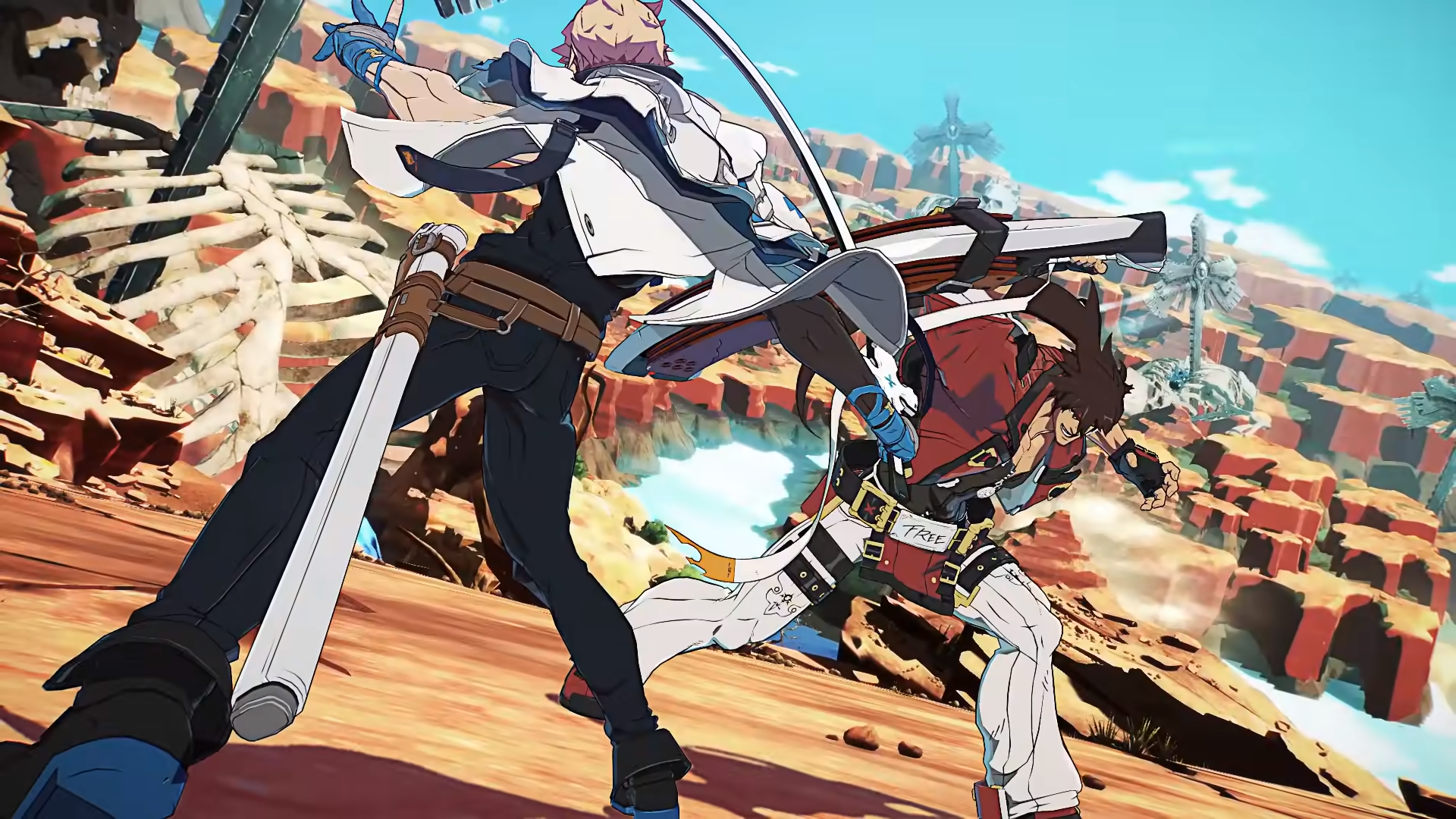
Image Credit: Arc System Works
The answer is you don’t!
Okay, that’s a bit harsh. Modern fighting games have done a lot of good to try and onboard new players, but this article isn’t about how fighting games have been getting easier to get into. A lot of modern fighting games are still choosing to forego single-player content. My favorite fighting game, BlazBlue Cross Tag Battle, the game that got me back into fighting games during the Pandemic, has a limp Story mode for each of the four series it crosses over with, and Survival mode for offline single player content. I have over 500 hours in this game between two consoles, and that’s almost all been spent in online lobbies. I played Survival mode once, and that was because it was the last trophy that I needed to get the platinum trophy for the game.
Under Night In Birth 2, a game that I love so much that I actually wrote a review for it. This is one of the most fun fighting games I’ve played in recent years, and the reverse beat combo system is a thing of beauty. But at the same time, I can’t recommend it at all because there’s just nothing to do offline. Arcade, Score Attack, Time Attack, Survival. It’s not meaningful content. And it really sucks because UNI has such a cool world and really cool characters. I’d love to get a fleshed-out story mode with them.
Guilty Gear Strive took a different approach with its Story mode. You don’t even get to play! It’s just a four hour movie that was animated in the game’s engine. And while it’s impressive, it’s also boring as shit! The novelty wears off pretty quickly. Besides that, it’s all the same stuff I’ve been mentioning for single-player content.
Once again I have to lump a bunch of praise onto Soul Calibur. In addition to the usual single-player modes, Soul Calibur 6 also features a Story mode where you can play through the main storyline of the game, as well as the individual stories of every character in the game except guest characters (besides Geralt oddly enough). You also have Libra of Soul; a mode where you once again make your own character and follow a story separate from the game’s main story. Soul Calibur is well and truly the only fighting game that gives a shit about its single player content anymore, and this is why we need Soul Calibur 7.
Street Fighter 6’s World Tour mode isn’t bad either. It’s a good way for newcomers to get their foot in the door, and it also teaches the player about the game’s mechanics like Parry and Drive Rush. And while it’s funny to make your own character with an amalgamation of a bunch of other characters’ moves, I feel like it would’ve been more beneficial to have your character use the fighting style of the person mentoring them. That way you could build muscle memory that you can use if you go online.
As I said, modern fighting games have been making huge strides to become more accessible to the casual audience. Games like Street Fighter 6 and Granblue VS Rising have one-button specials, completely removing the need for motion inputs. Soul Calibur is a series that has always focused on several small hits or one big hit, rather than long complex strings. BBTag is a game that only has you using quarter-circle turns for its special moves across 58 characters.
But at the end of the day, no amount of accessibility features will matter if your potential playerbase doesn’t have anything to do offline.
Closing
I’m honestly not sure what the takeaway from this is. I just think that it’s fascinating to see the shift in direction that fighting games took. I think that the FGC was in such a cool place before the internet and social media really took off. Before the era of online play, regions like the US, UK, and Japan would only ever meet once a year during EVO, and all three regions would have drastically different views on what they thought was good based on who the top players in their region were.
Now that we’re in an always-online era, that mystery is gone. One part of the hype of EVO Moment 37 is the fact that in the US, Chun-Li’s Lightning Kick super was thought to be un-parriable. When Daigo showed that it was just a myth, it was mindblowing, and that moment has gone down in FGC history.
I know that the landscape of fighting games has changed too much to go back to how it was. Online will always be the focus in hopes of creating the next big eSport. But that doesn’t mean single-player should be forgotten about completely.